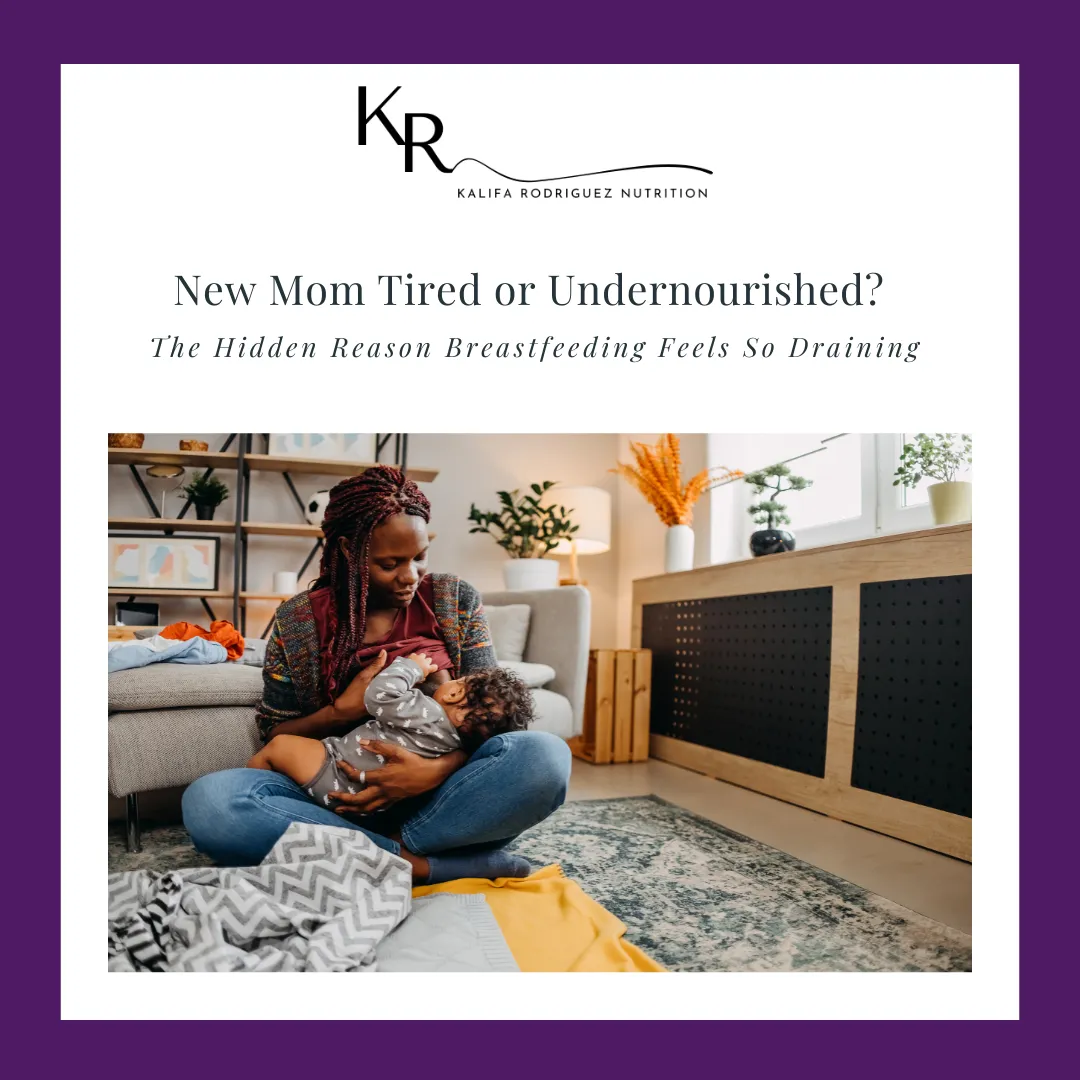
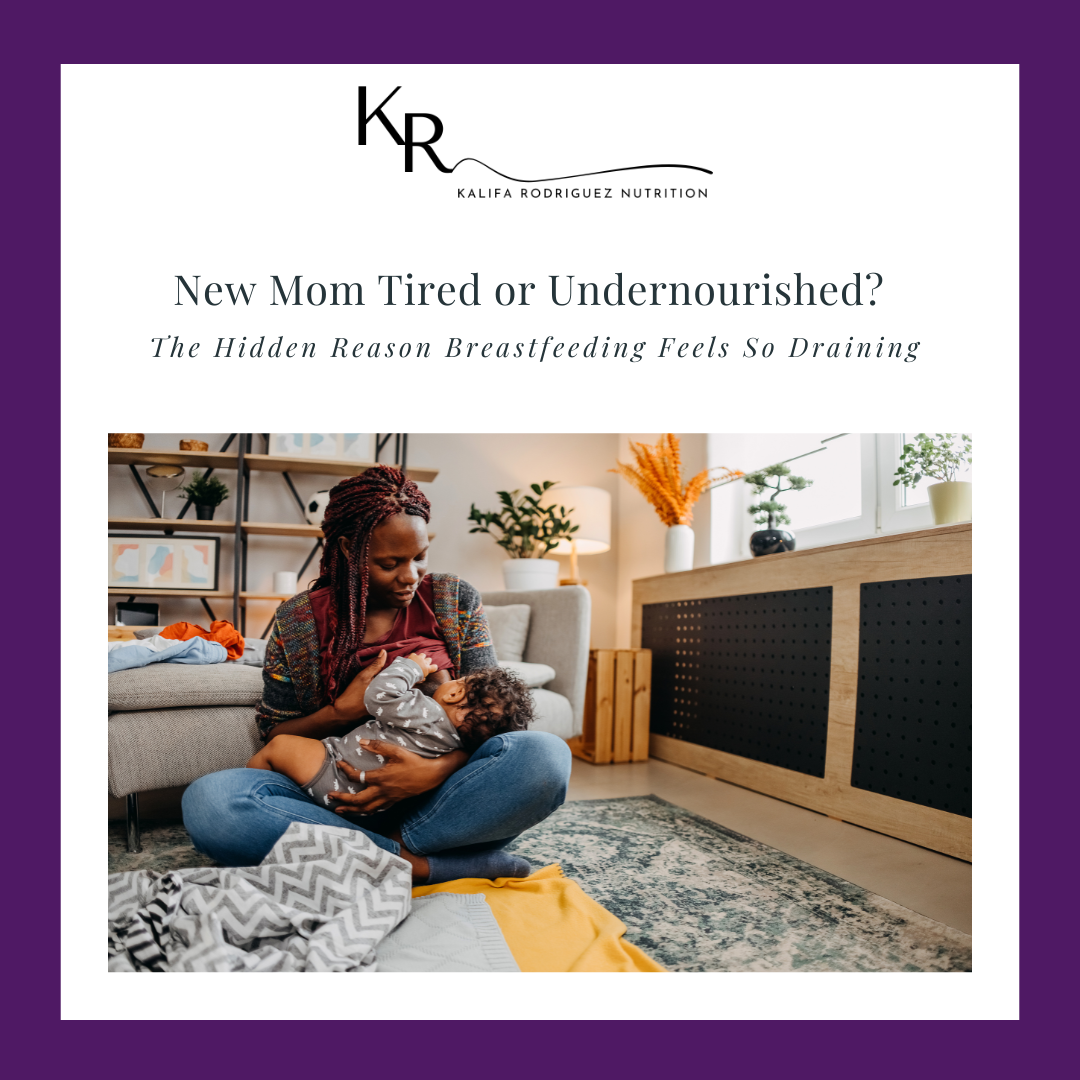
New Mom Tired or Undernourished? The Hidden Reason Breastfeeding Feels So Draining
Breastfeeding shouldn't feel this draining. And if it does, it's not a personal failure, it's a nutrition gap.
- Kalifa Rodriguez, Founder
Without a doubt there is a particular kind of tiredness that comes with motherhood.
I’m talking about the broken sleep, the constant mental load and the round-the-clock care of a tiny human.
Not to sound pessimistic but that kind of exhaustion comes with the territory…it’s what you automatically signed up for when you made the decision to have your baby. By God’s grace (the, universe, source, what ever you believe in…) you will make it through, we all do.
However; there is another kind of fatigue. The kind that lingers even when your baby gives you a decent stretch of sleep (I remember feeling like a brand new woman after my baby slept for a solid 5 hours).
The kind of fatigue I’m describing feels bone-deep and foggy. The kind that coffee simply cannot fix.
If you can relate...keep reading
Normal New-Mom Tired vs. Undernourished Exhaustion
Sleep deprivation is real, especially for breastfeeding moms and that’s because newborns typically feed 8–12 times per 24 hours in early weeks (American Academy of Pediatrics, 2022). That disruption alone affects energy and mood.
However, persistent fatigue despite opportunities for rest may indicate something else. Research shows that postpartum women are at increased risk of iron deficiency, vitamin D insufficiency, and suboptimal intake of key micronutrients, all of which are linked to fatigue and impaired cognitive function (Beard et al., 2005; NIH ODS, 2023). When exhaustion continues beyond what sleep disruption alone explains, we need to assess fuel.
The Added Energy Demands of Breastfeeding
Breastfeeding is metabolically expensive. The National Academies of Sciences estimate that exclusively breastfeeding women require approximately 450 to 500 kcal per day during the first 6 months postpartum (Institute of Medicine, 2005) and the energy expenditure for milk production can go up to 670 kcal/day, depending on the milk volume produced and the mother’s body composition (Butte & King, 2005).
To put this into perspective:
• Milk production averages 750–800 mL/day in the first 6 months
• Each mL of milk contains about 0.65–0.7 kcal
• That equals roughly 500+ kcal burned daily
This is comparable to running several miles per day. TAKE A SECOND TO GIVE YOURSELF A ROUND OF APPLAUSE!
The issue is that many moms are eating less postpartum, often influenced by low appetite, time constraints, or the internal and societal pressure to lose weight (Neville et al., 2001).
Common Nutrient Gaps During Breastfeeding
One thing most moms don’t realize is that calories matter but micronutrients are just as important!
Micronutrients are what our body uses to function properly. The way we feel, move, speak even think has to do with how well our body is functioning at a cellular level. Multiple dietary intake studies show lactating women frequently fall short in key nutrients (Verd et al., 2021; NIH ODS). Here is a quick review of common nutrients that breastfeeding moms are falling short on.
Iron
Pregnancy and blood loss at delivery can significantly deplete iron stores. Iron deficiency is strongly associated with fatigue, reduced cognitive performance, and impaired mood (Beard et al., 2005).
Vitamin D
Vitamin D requirements remain elevated during lactation. Studies show many breastfeeding women have insufficient serum vitamin D levels, especially in northern climates (NIH ODS, 2023). Low vitamin D status is linked to fatigue and mood disturbances. Also important to note is that levels of vitamin D found in breastmilk alone is not enough to support the growing infant and therefore mothers should be either supplementing the newborn with pediatric vitamin D drops or taking mega doses of 6000IU/day of vitamin D supplementation (Hollis et al., 2019; NIH).
Iodine
Iodine requirements increase to 290 mcg/day during lactation to support infant thyroid and brain development (Institute of Medicine, 2005). Surveys indicate many women do not meet this target without supplementation (Leung et al., 2011).
Vitamin B12
Particularly relevant for women consuming low animal-product diets. Inadequate B12 intake can contribute to neurological symptoms and fatigue (NIH ODS, 2023).
Choline
An important nutrient for the developing brain. Adequate intake increases to 550 mg/day during lactation (Institute of Medicine, 2005). Research shows most women do not meet choline intake recommendations through diet alone (Wallace & Fulgoni, 2016).
Omega-3 Fatty Acids (DHA)
Healthy fats in a mothers diet is essential. Maternal DHA intake directly affects breast milk DHA content. If you can't shake that low motivation funk or get easily triggered throughout the day, it's time to pay attention to how much fat your getting...that's right I said it, FAT. Healthy fats such as seeds, nuts, avocado and fish can drastically affect your energy and mood. Low intake has been associated with mood vulnerability and suboptimal infant neurodevelopment outcomes (Innis, 2007).
Magnesium
Although less studied specifically in lactation, magnesium plays a critical role in energy metabolism and neuromuscular function. Suboptimal intake is common in women of reproductive age (NIH ODS, 2023).
These deficiencies often become more noticeable around:
• 6–8 weeks postpartum
• When sleep deprivation peaks
• When prenatal nutrient stores are depleted (the body will prioritize breastmilk being produced and take from the mothers reserves)
This means milk output may remain adequate while the mother experiences progressive fatigue. So when a mom says, “My baby is thriving, but I feel awful,” that’s because her body is giving and giving and giving some more without being properly replenished.

How to Support Energy While Breastfeeding
Evidence-based strategies include:
• Meeting increased caloric needs
• Prioritizing protein intake for metabolic support
• Ensuring sufficient carbohydrate intake to sustain milk production
• Screening for iron deficiency if symptoms are present
• Considering targeted supplementation based on dietary intake and lab values
• Including iodine sources such as iodized salt or prenatal supplements containing iodine
Final Reframe
Breastfeeding may be demanding but it doesn’t have to be, and it certainly should not feel like it is draining the life out of you.
If exhaustion persists despite rest, it is worth finding a registered dietitian who specializes in woman’s health to evaluate your nutritional status. Because when proper fueling is restored, many women report improvements in energy, clarity, mood stability, and overall resilience.
You deserve to feel well while nourishing your baby.
References
Allen, L. H. (2005). Multiple micronutrients in pregnancy and lactation: An overview. The American Journal of Clinical Nutrition, 81(5), 1206S–1212S.
American Academy of Pediatrics. (2022). Breastfeeding and the use of human milk. Pediatrics, 150(6).
Beard, J. L., Hendricks, M. K., Perez, E. M., et al. (2005). Maternal iron deficiency anemia affects postpartum emotions and cognition. The Journal of Nutrition, 135(2), 267–272.
Butte, N. F., & King, J. C. (2005). Energy requirements during pregnancy and lactation. Public Health Nutrition, 8(7A), 1010–1027.
Institute of Medicine. (2005). Dietary Reference Intakes for Energy, Carbohydrate, Fiber, Fat, Fatty Acids, Cholesterol, Protein, and Amino Acids. National Academies Press.
Innis, S. M. (2007). Dietary (n-3) fatty acids and brain development. The Journal of Nutrition, 137(4), 855–859.
Leung, A. M., Pearce, E. N., & Braverman, L. E. (2011). Iodine nutrition in pregnancy and lactation. Endocrinology and Metabolism Clinics, 40(4), 765–777.
National Institutes of Health, Office of Dietary Supplements. (2023). Fact Sheets for Health Professionals.
Neville, M. C., Keller, R., Seacat, J., et al. (2001). Studies on human lactation. The American Journal of Clinical Nutrition, 73(2), 360–370.
Verd, S., et al. (2021). Dietary intake in lactating women: Nutritional adequacy review. Nutrients, 13(2), 420.
Wallace, T. C., & Fulgoni, V. L. (2016). Assessment of total choline intakes in the United States. Nutrients, 8(2), 108.