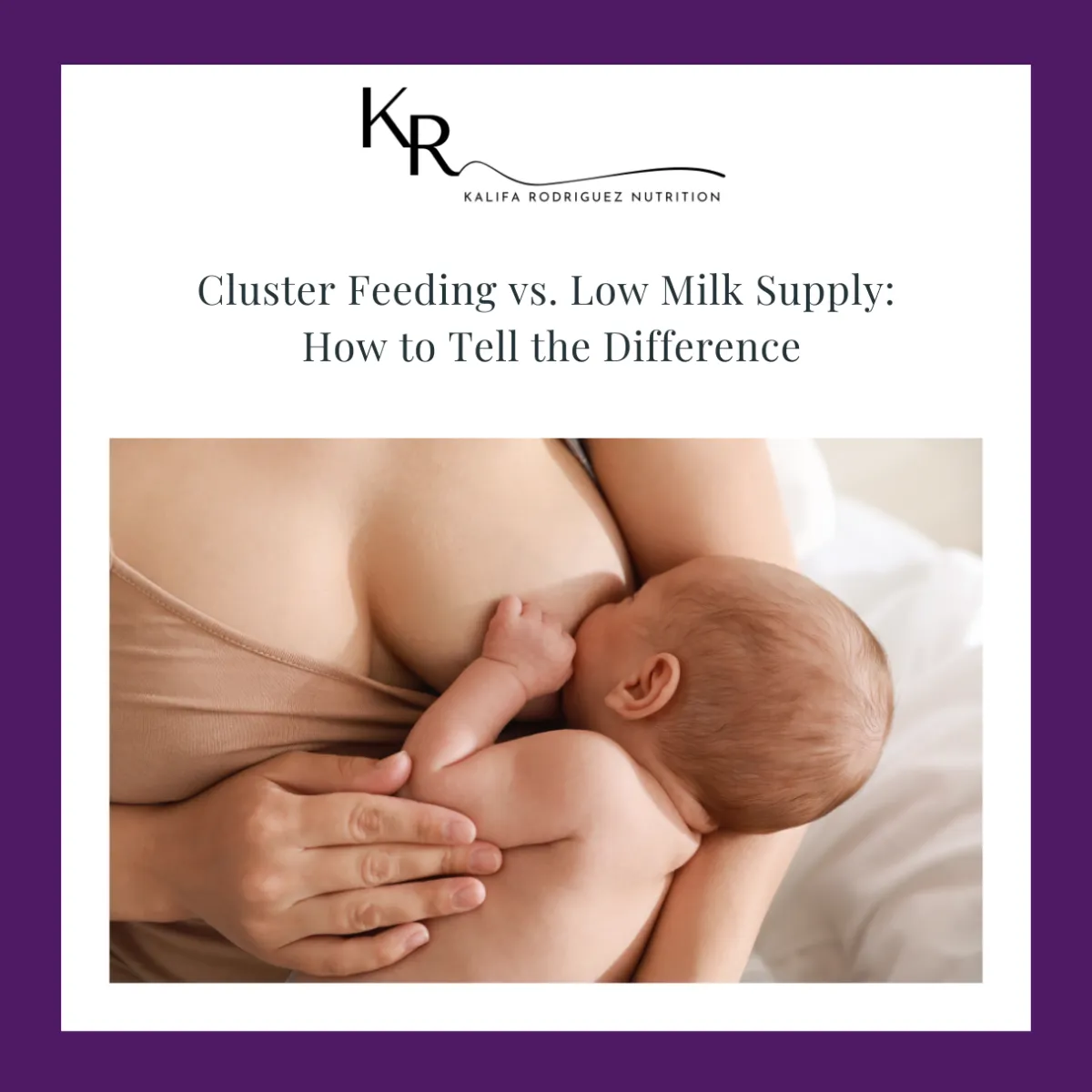
Cluster Feeding vs. Low Milk Supply: How to Tell the Difference
“Wondering if your baby is cluster feeding or if your milk supply is low? Learn the signs of normal newborn feeding, when to be concerned, and how to confidently support your breastfeeding journey."
It's 3:17 AM...Your baby has been nursing for what feels like hours.
You fed them twenty minutes ago. They drifted off peacefully at the breast, only to wake up crying the moment you laid them in the bassinet. Now they're rooting again, searching for your breast. Crying as if they haven't eaten all day.
You glance down at your breasts, why don't they don't feel as full as they did yesterday? Maybe they're empty. Maybe your baby is still hungry. You ask the million dollar question: Am I making enough milk?
If you've found yourself frantically Googling "How do I know if I have low milk supply?" while nursing in the middle of the night, I want you to know something first. What you're experiencing is one of the most common worries among new breastfeeding mothers.
In fact, perceived low milk supply is one of the leading reasons women stop breastfeeding earlier than they planned. Yet research consistently shows that many mothers who worry they aren't making enough milk actually have a healthy milk supply.
The problem isn't always low milk production. More often, it's that no one prepared you for what normal newborn feeding actually looks like.
Here's the truth: Newborns don't nurse on a schedule, they nurse to eat and they nurse for comfort.
Most importantly, they nurse to teach your body how much milk they'll need tomorrow.
That process is called cluster feeding, and although it can feel exhausting, it is often one of the healthiest signs that breastfeeding is getting established.
Let's talk about why.
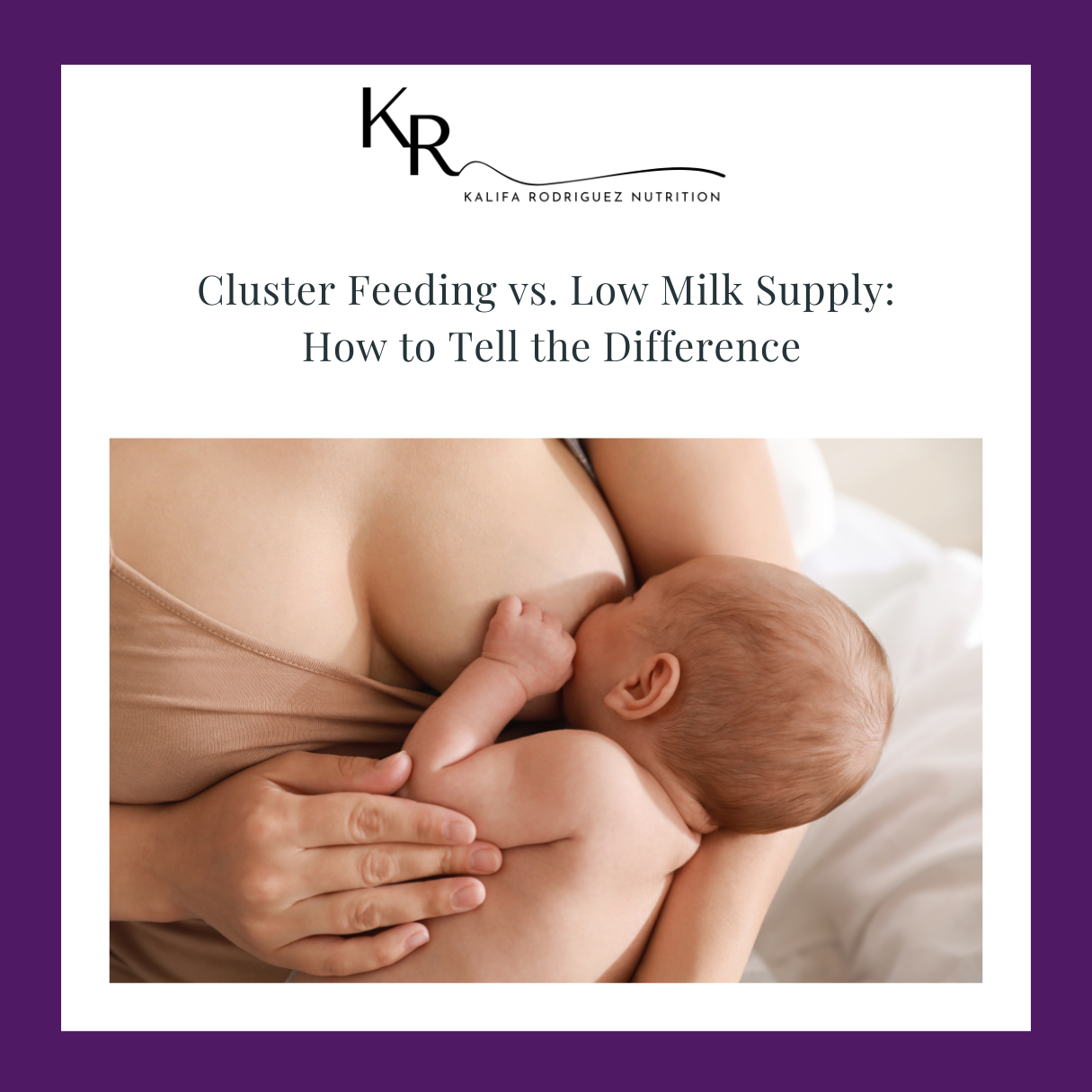
What Is Biologically Normal During the First Three Months?
One of the biggest surprises for new moms is just how much breastfeeding changes during those first weeks.
Just when you think you've figured out your baby's routine, they suddenly want to nurse every hour...Or every thirty minutes...Or seemingly all evening long.
It feels unpredictable because, biologically, it is.
Your body isn't born knowing exactly how much milk your baby will need. Instead, the two of you work together to build your milk supply. Think of breastfeeding as an ongoing conversation between your baby and your breasts.
Every time your baby nurses, tiny nerves in your nipple send messages to your brain. In response, your brain releases two remarkable hormones. Prolactin, which tells your body to make more milk. And oxytocin, which causes the milk you've already made to flow to your baby through the milk ducts.
The more frequently milk is removed, the stronger those signals become.
This is why frequent nursing during the newborn period isn't usually a sign that your baby isn't getting enough. It's how your body learns how much milk to make.
Days 1 to 3. Colostrum Is Enough
Many mothers are surprised when they don't see ounces of milk immediately after birth. That's because your body isn't supposed to produce large volumes yet. Instead, you produce colostrum, often called "liquid gold".
Although it's measured in teaspoons rather than ounces, colostrum is incredibly concentrated with antibodies, immune cells, protein, vitamins, minerals, and growth factors that protect your newborn while their immune system develops.
Your baby's stomach is tiny at birth. On Day 1, it holds only about 5 to 7 mL, roughly the size of a cherry.
That's why those small amounts of colostrum are exactly what your baby needs.
Frequent nursing during these first days helps stimulate your mature milk production while ensuring your baby receives this powerful first food.
Days 3 to 5. Your Milk Begins to Transition
Around the third to fifth day after birth, your milk begins transitioning from colostrum to mature milk. Many women notice their breasts becoming fuller, heavier, or even uncomfortably engorged. At the same time, babies often become more alert and begin nursing more frequently.
This can feel confusing.
"My milk just came in...so why is my baby feeding even more?"
The answer is beautifully simple.
Your baby is helping establish your long-term milk supply.
Your Baby Is Placing Tomorrow's Milk Order Today
During the first month of life, babies grow at an incredible rate while their brains are developing rapidly.
By week 2 they should have regained their birthweight and their nutritional needs are increasing almost daily. To keep up with that growth, babies naturally increase how often they nurse.
Instead of spacing feeds farther apart, they often group several feedings together over a few hours. This is called cluster feeding.
It's especially common during the evening between 5pm-10pm, although it can happen any time of day.
Your baby may nurse...fall asleep. Wake twenty minutes later. Nurse again. Take a short break. Then ask to feed again.
While exhausting, this behavior is completely normal for many healthy newborns.
Think about your favorite bakery. If customers suddenly start buying twice as much bread, the baker knows to prepare more loaves the next morning. Your breasts work in much the same way. Every time your baby nurses, especially during those marathon cluster-feeding sessions, they send a biological message to your brain.
"We're growing."
"We're going to need more milk."
"Please increase production."
Your brain responds by releasing more prolactin, the hormone responsible for milk production. The result? Your milk supply gradually increases to meet your baby's changing needs.
This is one of the most elegant examples of supply and demand found anywhere in the human body.
Cluster feeding isn't a sign your body is failing. It's your baby's way of helping your body succeed.
"But It Feels Like They're Never Full..."
This is the point where many mothers begin doubting themselves.
If your baby wants to nurse again after only thirty or forty-five minutes, it's easy to assume they're still hungry because you didn't make enough milk.
But newborn stomachs are designed for frequent meals.
Here's what that looks like:
Day 1: approximately 5 to 7 mL (about the size of a cherry)
Day 3: approximately 22 to 27 mL (about the size of a walnut)
One week: approximately 45 to 60 mL
One month: approximately 80 to 150 mL (2.5 to 5 ounces) per feeding, although intake naturally varies from feed to feed.
Breastfed babies also tend to eat differently than bottle-fed babies.
Instead of taking identical volumes every three or four hours, they often take smaller, more frequent meals.
How Much Milk Should You Be Making?
One of the biggest misconceptions about breastfeeding is that your breasts should produce the same amount of milk at every feeding.
That's simply not how breastfeeding works.
Milk production naturally fluctuates throughout the day in fact many mothers produce more in the morning (3am-9am) and somewhat smaller volumes in the evening, which is one reason cluster feeding commonly occurs later in the day.
Rather than focusing on ounces per feed, it's much more helpful to think about total milk production over 24 hours.
Once your milk supply is established at around week 6-8, most exclusively breastfeeding mothers produce approximately 750 to 900 mL (25 to 30 ounces) of milk every day.
Interestingly, breastfed babies don't continue drinking dramatically larger volumes after the first month.
Instead, breast milk itself becomes more energy-dense and changes in composition to meet your baby's evolving needs.
If you're exclusively pumping, these numbers can provide a helpful benchmark.
If you're nursing directly, remember that your baby is almost always more effective at removing milk than a breast pump.
Soft Breasts Don't Mean Empty Breasts
Around six to twelve weeks postpartum, many mothers notice something that sends them into panic mode.
Their breasts suddenly feel softer or they stop leaking.
By this time they no longer wake up painfully engorged and many assume their milk supply has disappeared.
In reality, the opposite is often true because this actually means your milk supply has simply become more efficient.
Instead of storing large amounts of milk between feedings, your body has learned to produce milk on demand.
Soft breasts are often a sign that breastfeeding is becoming well established. Not that your milk has disappeared.
You Don't Have to Figure It Out Alone
Breastfeeding is natural, but that doesn't mean it always comes naturally. Like any new skill, it takes time, support, and understanding.
One of the biggest mistakes I see new moms make is focusing all of their attention on feeding the baby while forgetting that your body needs nourishment too. Producing breast milk requires energy, protein, fluids, vitamins, and minerals. When you're recovering from birth, running on broken sleep, and barely finding time to eat, it's no wonder you feel depleted.
That's exactly why I created Energize & Nurture, my nutrition course for breastfeeding mothers.
Inside, you'll learn how to nourish your body for postpartum recovery, support a healthy milk supply through evidence-based nutrition, build balanced meals even on your busiest days, and care for yourself without adding more stress to your plate.
Because when a mother is well nourished, she's better equipped to nourish her baby.
If you're ready to feel more confident in your breastfeeding journey and finally stop second-guessing every feeding, I'd love to support you in my online course Energize & Nurture: A Nutrition Guide for Breastfeeding Moms.
Also please feel free to book a consultation or join my email newsletter for more real, evidence-based postpartum nutrition support.
Because moms deserve support too.
xoxo