How to Increase Breast Milk Supply Naturally. A Registered Dietitian’s Evidence-Based Guide
“ Milk supply isn’t about doing more. It’s about nourishing your body enough to do what it already knows how to do.”
- Kalifa Rodriguez RD., CBS, M.Sc.
If you’re worried about your milk supply, take a breath. You’re not broken. And you’re definitely not failing.
Low or dipping milk supply is one of the most common concerns I hear from breastfeeding moms. And here’s the truth. For most women, milk supply issues are not about genetics or willpower. They’re about nutrition gaps, hydration missteps, and unmet energy needs.
As a Registered Dietitian and Certified Breastfeeding Specialist, I want to walk you through what actually works. No fear tactics. No magic teas or lactation treats. Just evidence-based nutrition strategies that support your body, your hormones, and your milk production.

With that said, let's start with the foundation because balanced nutrition builds milk supply.
Are you eating enough?
Milk production is metabolically demanding. Your body needs fuel. And not just calories, but the right balance of nutrients.
A strong milk supply starts with eating from all four food groups consistently:
Fruits and vegetables
Grains
Protein (meat and alternatives)
Milk and alternatives
Each group plays a role. Carbohydrates provide immediate energy for milk synthesis. Protein supplies amino acids needed to rebuild tissue and support milk production. Healthy fats improve milk quality and support hormone balance. Vitamins and minerals act behind the scenes, driving the hormonal cascade required for lactation.
When moms unintentionally undereat or cut food groups, milk supply often takes the hit first.
Use the Balanced Plate Blueprint at Every Meal
One of the simplest ways to support milk supply is by building balanced meals.
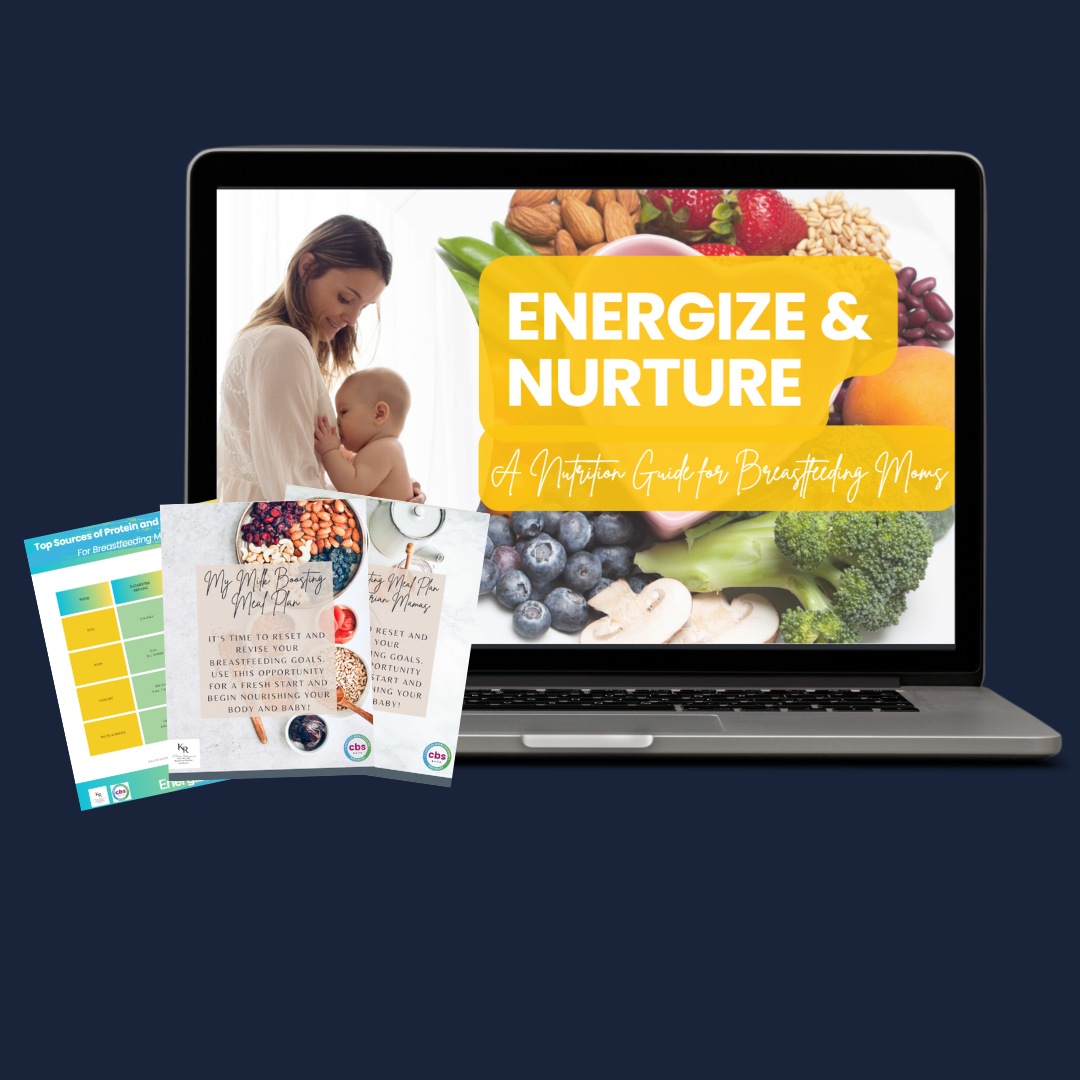
Here’s the framework I teach inside Energize & Nurture:
½ plate fruits and/or vegetables
¼ plate protein
¼ plate grains or starchy vegetables
This ensures steady energy, stable blood sugar, and adequate nutrient intake. Bonus points for color. The more colorful your plate, the wider the range of vitamins, minerals, and antioxidants you’re getting.
Macronutrients Matter. Especially Protein and Healthy Fats
Carbs, protein, and fat are all essential, but when milk supply is the goal, protein and healthy fats are the MVPs.
Breastfeeding moms need an extra 20-25g of protein per day compared to non-lactating women. Protein-rich foods like eggs, fish, beans, lean meats, and nuts support milk synthesis and postpartum recovery.
One practical tip. Eat your protein first. When energy runs low, the body will break down protein to meet demands, leaving less available for milk production.
Healthy fats, especially omega-3s from foods like salmon, sardines, olive oil, nuts, and avocado, improve the fatty acid profile of breastmilk. These fats are passed directly to baby and support brain development. They’re also linked to improved maternal mood and reduced postpartum depressive symptoms.
Don’t Overlook Micronutrients. They Drive Hormones
Milk production is hormone-driven. And hormones are influenced by micronutrients.
During lactation, needs for vitamin A, choline, iodine, chromium, and copper are significantly higher. Iodine requirements, in particular, are doubled. Seaweed, dairy, eggs, and fish are excellent sources.
Iron needs actually decrease postpartum, while calcium requirements remain stable at 1000 mg/day. Magnesium, zinc, potassium, and sodium also play roles in cellular function and milk production.
Before jumping to supplements, focus on food first. Bone broth, beans, leafy greens and root vegetables help rebuild mineral stores depleted during pregnancy and breastfeeding. Up to 10% of the body’s mineral stores can be lost per pregnancy, so replenishment matters.
Drink enough water, but don't overdo it.
Yes, hydration matters. But more isn’t always better.
Chronic dehydration can lower milk supply. But overhydration can dilute electrolytes and actually reduce milk production by redirecting fluids away from the breast.
A realistic goal for most breastfeeding moms is 2–3 liters of fluid per day. Let thirst guide you. Keep water nearby while nursing or pumping. Limit high-sugar and high-caffeine drinks, which can increase fluid loss.
The first sign of dehydration is thirst. And lactating women naturally drink more than non-lactating women because their bodies are asking for it. Trust that signal
Watch out! Certain Foods and Habits Can Lower Supply
Some foods and habits quietly interfere with milk production.
Alcohol blocks oxytocin, the hormone responsible for milk let-down. Moderate intake is generally safe, but heavy or frequent drinking can sharply reduce supply.
Certain herbs like sage, peppermint, parsley, and menthol can decrease milk supply when consumed in large amounts.
Undereating is one of the most common and overlooked causes of low supply. Breastfeeding burns roughly 380–600 calories per day, equivalent to an hour of moderate exercise.
Milk supply thrives when the body feels safe, nourished, and supported.
Here's What To Do Next
If this post resonated, and you’re realizing your milk supply may need nourishment, not pressure, you don’t have to figure this out alone.
Inside my Energize & Nurture. A Nutrition Guide for Breastfeeding Moms, I walk you step by step through balanced meals, portion guidance, protein targets, hydration strategies, and practical food swaps that support milk production and postpartum recovery without overwhelm.
Think of it as your calm, evidence-based roadmap for feeding yourself so you can confidently feed your baby.
You deserve support too. 💛